
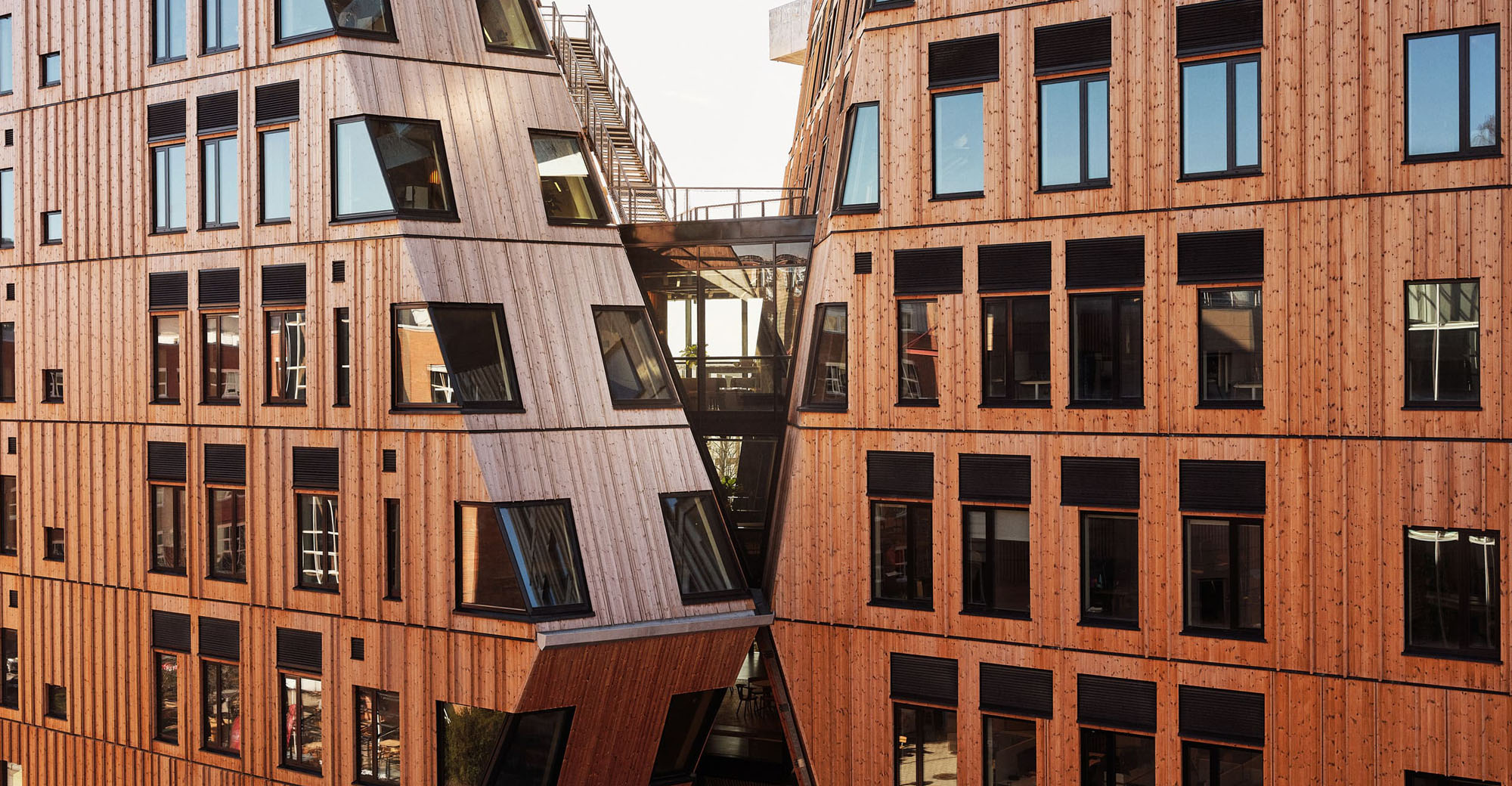
Vertikal Nydalen is a multifunctional building designed on the "triple zero" principle
Angular sloping facades covered with wood, metal balconies with perforated balustrades and paneled bases, windows of various shapes and sizes. All these features of the recently built Vertikal Nydalen multifunctional building in Oslo immediately catch the eye. But the main feature of the project, which was created as part of the pilot projects for sustainable construction, is its high energy efficiency. This is achieved through the use of renewable energy sources for heating, cooling and ventilation. The authors of the project, Snohetta architects, called this approach the "triple zero" principle. What solutions have been used to implement this principle? Why does the building consist of two towers of different heights? And how do interior concrete walls affect the internal microclimate? Read about this below.
The Vertikal Nydalen multi-purpose building project is linked to two sustainable building research projects supported by the Research Council of Norway. The first, LowEx, focuses on building heating and cooling systems powered mainly by renewable energy sources. The second, naturally, is dedicated to is the development of new natural ventilation strategies. Thanks to these programs, the "triple zero" principle implemented in Vertikal Nydalen was born. The total area of this multi-purpose building is 11,000 square meters. It consists of two towers, one of which is seven floors and the other is eighteen. The first two floors of the two buildings have cafes and restaurants, followed by five levels of office space. The eighth to eighteenth floors of the high tower occupy are the residential apartments. The different heights of the buildings are provided in such a way that the residents of each apartment have an unlimited view from the windows. The main source of heat energy for powering this multi-functional building is geothermal wells, from which water is supplied by heat pumps to pipelines laid in the structure of the structure. During the day, the heat absorbed by the concrete floors and walls is released at night and contributes to maintaining a stable temperature in the building. In turn, the pump is powered by the roof. with energy stored with photovoltaic panels. All rooms have special sensors that monitor temperature conditions. In addition, the area has special QR codes, through which you can leave comments about thermal comfort and air quality in the building.


The geometry of Vertikal Nydalen, with its angular, sloping facades and irregularly shaped interior spaces, is also heavily dictated by the desire for energy efficiency; inside the building. This natural ventilation system made it possible to do without massive ventilation pipes and fans, thereby saving space and not reducing the height of the ceilings. But the intricate metal balconies with perforated railings and paneled bases are purely a design move. Thanks to the reflection of the sun's rays in their lower part, an unusual lighting effect is created.
BUILDING NAME: Vertikal Nydalen
AUTHORS / ARCHITECTS: Snohetta
BUILDING DATE: 2024
Location: Oslo, Norway